
Latest cyberpsychology breakdown

Published case

It Blocked Ads... and Shared Your Account Access - Twitch

The Twitch extension really did make streams better. That did not answer a separate question: what was it doing with users' account access? A useful feature and a security problem can exist at the same time.

Featured case breakdowns

Read the human pattern behind the security event.

Start with the newest breakdown, then follow the recurring patterns across healthcare scams, AI systems, and everyday security decisions.

Browse all cases

Browse the psychology

A working vocabulary for digital pressure.

Begin with sourced concepts connected to published cases, alongside clearly labeled demonstrations still awaiting full research packets.

Open the concept library
Psychology

Truth-Default Theory

People usually believe other people unless the situation creates a strong reason to check more closely. That useful default can also make a convincing false identity feel real.

Explore the concept
Psychology

Prospect Theory

Once a decision is framed around an existing loss, a risky option may feel more attractive because it preserves some chance of escaping the loss completely.

Explore the concept

Practical Cyberpsychology

Believable is not the same as verified.

A realistic resume, a smooth interview, and strong answers can create a good impression. Important identity and access decisions still need independent checks.

See how practical guidance is developed →
  1. 01
    Verify outside the application

    Confirm identity, work history, and education through approved sources the applicant does not control.

  2. 02
    Secure the handoff

    Make sure company equipment reaches the verified person and connect hiring concerns to IT and security.

  3. 03
    Start with needed access

    Give a new worker the access required for the role, then review and expand it deliberately.

Test yourself

Can you recognize the psychology before the pressure works?

Try short cybersecurity, psychology, and cyberpsychology quizzes, or inspect a simulated email and spot what deserves a closer look.

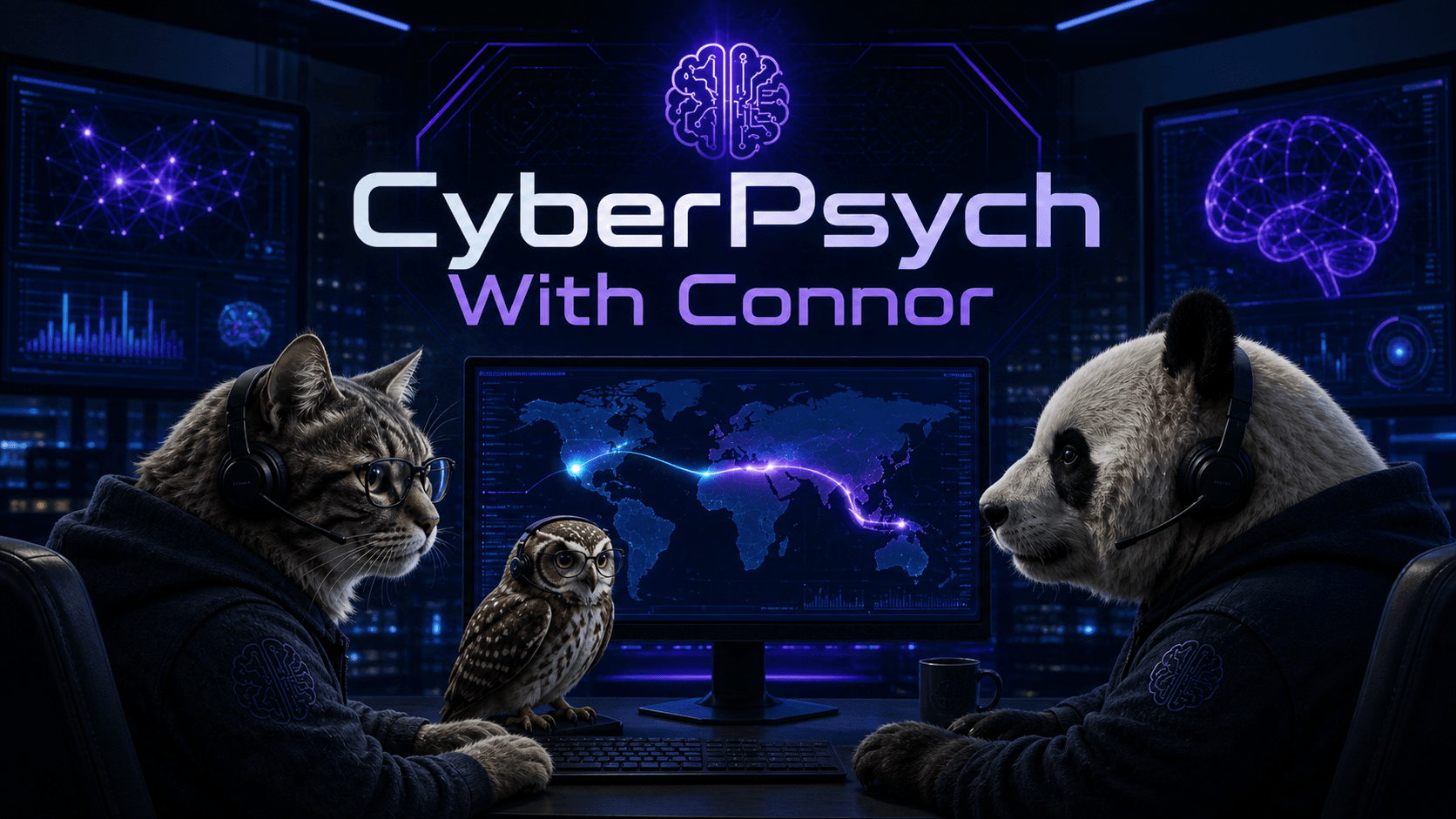
Pancake the cat, Tiger the owl, and Simba the panda calmly monitoring a CyberPsych security operations desk
Pancake, Tiger & Simba on watchNotice the signal. Understand the context.
Pancake · catWhat changed?Tiger · owlWhat does it mean?Simba · pandaWhat should we do next?

Pancake notices. Tiger adds context. Simba finds the next step.

Connor smiling against a dark navy circular background
Human behaviormeets digital systems

About Connor

Connor Shaney

Creator, CyberPsych with Connor

Connor Shaney is the creator of an independent public-education project examining how psychology, human behavior, and digital systems interact. His work makes cybersecurity incidents, scams, AI risks, persuasion techniques, and practical protective habits understandable to a general audience.

About the project →